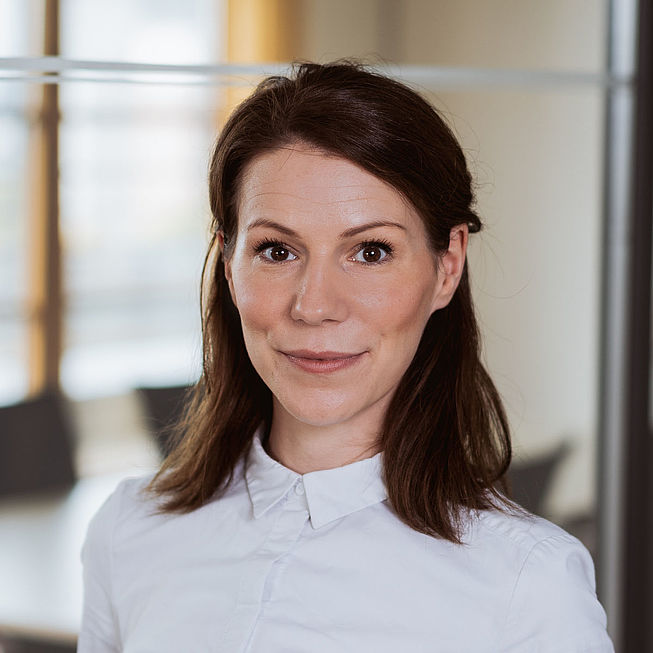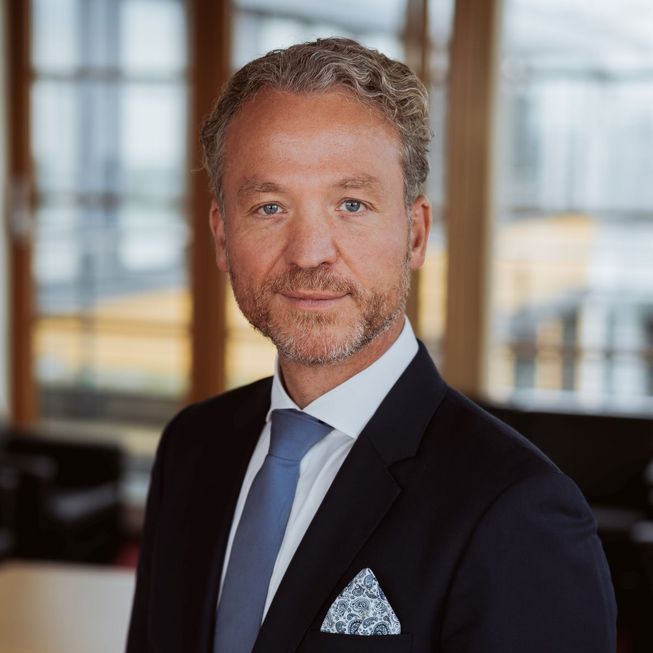
“The era of digital platforms whose business model is based purely on matching supply and demand is over,” believes Olaf Rathgeb. As CTO of Fr. Meyer's Sohn (FMS), he himself was an early adopter of the platform approach, having built a Supply Chain Management (SCM) platform for customers of the globally operating freight forwarding company. The platform has helped unlock significant potential. So when he says that the next stage of digitalization is no longer about platforms, but about agentic networks that autonomously and intelligently create data and workflow ecosystems, it is worth listening.
For the technology expert, however, it is far from certain that this trend will succeed on a broad scale. Logistics IT is characterized by opposing trends: on the one hand, there are legacy systems and inconsistent digitalization standards; on the other, AI requires clean data structures and well-defined processes. The fact that FMS itself is able to manage all of this is also due to a decision the company made more than 15 years ago.
The foundation: software that grows with the business
From the outset, FMS developed its core system, “Seastep,” with the support of HEC. FMS employees use the system to manage transports on behalf of customers. “I would make that decision again at any time,” says Olaf Rathgeb. “We have a system that is highly tailored to our needs, with a high degree of flexibility, and that gives us excellent support for our requirements.”
For Rathgeb, the comparison with competitors that rely on standard software is clear-cut: “What we hear from others is that it can sometimes be very difficult to get your own requirements implemented quickly. That is not a problem we have.”
The early decision to develop custom software has also made it easier to integrate new business units thanks to the system’s high degree of flexibility. In addition to organic growth, FMS has integrated several acquisitions in recent years. This involves more than just operational processes; in some cases, entire business models, logistics products or customer-specific software solutions of the acquired companies are involved – solutions that cannot simply be discontinued.
The IT infrastructure that FMS has built and maintained over many years has itself become a selling point in acquisition discussions. “Because we have invested in IT for many years, it is now at a level where it is genuinely perceived as a major asset,” Rathgeb says. For smaller companies without extensive in-house IT resources, he sees this as “a good opportunity to put their operational excellence on a solid IT foundation.”
Transparency as a strategy for resilience – and for business
Another strong argument is FMS’s proprietary SCM platform, “Cruise Control,” which is built on data from the company’s central freight forwarding system, Seastep. As disruptions and crises put supply chains under increasing pressure, freight forwarders need to be able to adapt quickly. Transparency is crucial: “Where are my goods? What stage of customs clearance or handling are they at, and what options do I have to intervene?” Cruise Control provides customers with answers to these questions.
Only with this level of transparency is it possible to proactively inform customers or arrange alternative transportation. The platform provides the digital support required to do so. FMS has since also opened Cruise Control to shipments that are not handled by FMS itself. The reason is that several parties using different systems often participate in the same shipment: “Solutions like these always fall back to the lowest common denominator. And otherwise, that is often email and Excel,” says Olaf Rathgeb.
FMS has therefore decided to provide value that extends beyond its own transport services, while ensuring that data protection requirements are fully met. The response has validated the strategy: “More and more customers are using it because they say: ‘That’s great – now we have an easy way to digitalize this.’”
For FMS, Rathgeb acknowledges, this creates a double benefit: “Often, we get into conversations about digitalization through our transport services – and sometimes it works exactly the other way around.”