+49 40 2393 0 info@fms-logistics.com Cruise Control Login 联系方式

After the platform comes the agent: Digital trends in the freight forwarding business

Olaf Rathgeb, CTO of Fr. Meyer's Sohn (FMS), on the next chapter in logistics digitalization and why choosing custom-built software continues to pay off.

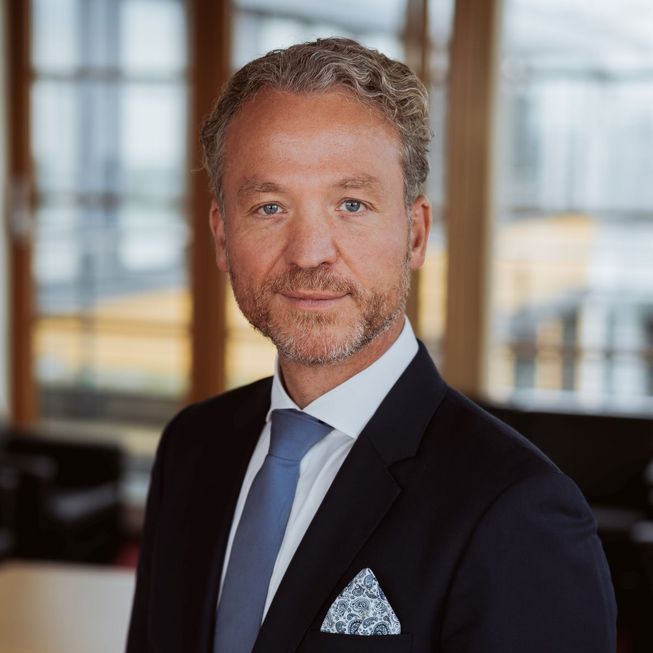
Olaf Rathgeb

“The era of digital platforms whose business model is based purely on matching supply and demand is over,” believes Olaf Rathgeb. As CTO of Fr. Meyer's Sohn (FMS), he himself was an early adopter of the platform approach, having built a Supply Chain Management (SCM) platform for customers of the globally operating freight forwarding company. The platform has helped unlock significant potential. So when he says that the next stage of digitalization is no longer about platforms, but about agentic networks that autonomously and intelligently create data and workflow ecosystems, it is worth listening.

For the technology expert, however, it is far from certain that this trend will succeed on a broad scale. Logistics IT is characterized by opposing trends: on the one hand, there are legacy systems and inconsistent digitalization standards; on the other, AI requires clean data structures and well-defined processes. The fact that FMS itself is able to manage all of this is also due to a decision the company made more than 15 years ago.

The foundation: software that grows with the business

From the outset, FMS developed its core system, “Seastep,” with the support of HEC. FMS employees use the system to manage transports on behalf of customers. “I would make that decision again at any time,” says Olaf Rathgeb. “We have a system that is highly tailored to our needs, with a high degree of flexibility, and that gives us excellent support for our requirements.”

For Rathgeb, the comparison with competitors that rely on standard software is clear-cut: “What we hear from others is that it can sometimes be very difficult to get your own requirements implemented quickly. That is not a problem we have.”

The early decision to develop custom software has also made it easier to integrate new business units thanks to the system’s high degree of flexibility. In addition to organic growth, FMS has integrated several acquisitions in recent years. This involves more than just operational processes; in some cases, entire business models, logistics products or customer-specific software solutions of the acquired companies are involved – solutions that cannot simply be discontinued.

The IT infrastructure that FMS has built and maintained over many years has itself become a selling point in acquisition discussions. “Because we have invested in IT for many years, it is now at a level where it is genuinely perceived as a major asset,” Rathgeb says. For smaller companies without extensive in-house IT resources, he sees this as “a good opportunity to put their operational excellence on a solid IT foundation.”

Transparency as a strategy for resilience – and for business

Another strong argument is FMS’s proprietary SCM platform, “Cruise Control,” which is built on data from the company’s central freight forwarding system, Seastep. As disruptions and crises put supply chains under increasing pressure, freight forwarders need to be able to adapt quickly. Transparency is crucial: “Where are my goods? What stage of customs clearance or handling are they at, and what options do I have to intervene?” Cruise Control provides customers with answers to these questions.

Only with this level of transparency is it possible to proactively inform customers or arrange alternative transportation. The platform provides the digital support required to do so. FMS has since also opened Cruise Control to shipments that are not handled by FMS itself. The reason is that several parties using different systems often participate in the same shipment: “Solutions like these always fall back to the lowest common denominator. And otherwise, that is often email and Excel,” says Olaf Rathgeb.

FMS has therefore decided to provide value that extends beyond its own transport services, while ensuring that data protection requirements are fully met. The response has validated the strategy: “More and more customers are using it because they say: ‘That’s great – now we have an easy way to digitalize this.’”

For FMS, Rathgeb acknowledges, this creates a double benefit: “Often, we get into conversations about digitalization through our transport services – and sometimes it works exactly the other way around.”

FMS Chatbot Hugo

Automation as a task: AI in day-to-day operations

The next stage of digitalization is the use of artificial intelligence. Around two and a half years ago, FMS introduced a virtual AI employee named Hugo, named after the company founder’s middle name. Hugo supports FMS employees with information and assistance in their day-to-day work. Initially, Hugo was little more than a knowledge management system that answered questions about logistics processes and internal standards. Today, he also takes on tasks: “Step by step, we are expanding Hugo’s capabilities with tools that perform individual work steps and provide access to specific applications – always within the context of the user making the request.”

This is based on a dedicated project called PAI (Process Automation based on AI). “It is a layer that sits on top of the applications, including Seastep, but also Outlook and various other systems,” explains Rathgeb. Its core function is to automatically transform unstructured data – emails, documents and website content – into structured data. This makes it possible to automate numerous work steps. For example, bookings and orders can be created, documents can be filed in electronic records, and information can be extracted from documents provided by customers and partners, eliminating the need for manual data entry. All data collected and processed remains within FMS’s own secure environment to prevent unintended data leakage.

Human in the loop: People remain indispensable

When introducing the technology, FMS deliberately focused on internal communication. A small product management team, known as “Hugo Management,” presented potential use cases. This was complemented by a series of webcasts for the entire workforce, in which Olaf Rathgeb personally explained the different classes of AI, how FMS intends to use them and what this means for individual employees.

The CTO takes concerns about changes to jobs seriously, but puts them into a more differentiated perspective: “Strictly speaking, AI does not take away jobs; it takes away tasks – repetitive, simple administrative tasks.” The requirements placed on employees will change, he says, and employees will need to adapt accordingly.

FMS has deliberately established two guardrails. First, every automated process operates with a “human in the loop.” In other words, information is never sent directly to customers; it always passes through an employee who makes the final decision. Second: “We do not use AI at the customer interface. Instead, we focus on the administrative processes behind the scenes in order to maintain the quality and flexibility of our customer service.”

A constant race: cybersecurity

The more processes become digital and AI-driven, the larger the attack surface becomes. “Cyber resilience has become extremely important since around 2018,” says Olaf Rathgeb. He sees the fact that AI models are now highly capable of identifying vulnerabilities in software as accelerating a trend that has been underway for some time: “Today, you no longer have to be a highly specialized hacker to launch very complex attack vectors against a company.”

And this trend could intensify considerably. “We are on the threshold of the commercial use of quantum computing. We have to prepare for the computing power it could bring to breaking encryption algorithms.” For Rathgeb, cybersecurity therefore remains a permanent race.

The end of platforms – and what comes next

But it is not only cybersecurity that is driving a race against the clock. AI is also opening up new possibilities. According to Rathgeb, the era in which digital platforms act as intermediaries between supply and demand, with business models based purely on this function, is coming to an end.

In his view, the next stage of development will be agentic networks made up of autonomous software agents that can independently perform tasks, negotiate contracts or organize purchasing. “I believe this is almost impossible to stop.”

The prerequisite is the same as for platforms and any other AI application: a solid data foundation. “Cleanly structured, non-redundant and consistent data, and having your processes under control. That is the foundation,” says the CTO, while warning against excessive enthusiasm. The fact that a start-up can develop a modern solution does not mean that it can be scaled across an entire industry with its established legacy applications: “The challenge will be to systematically and securely leverage these opportunities, even when you have all these legacy issues.”

To make the most of the opportunities presented by digitalization, many logistics companies still have some groundwork to do. Because, as Olaf Rathgeb puts it, even if the trends change – platforms today, agentic networks tomorrow – the requirements for clean processes and reliable data remain the same.


About the person and the company

Olaf Rathgeb is CTO of Fr. Meyer's Sohn (FMS), a globally operating, family-owned freight forwarding company with more than 1,400 employees at 65 locations. In addition to IT, he is responsible for the company’s entire process landscape, from master data to software development.

Headquartered in Hamburg, FMS specializes in international bulk commodities, including forestry and agricultural products as well as steel. The company offers solutions for sea freight, air freight and truck transportation, as well as rail and inland waterway shipping.

作者
Nadine Kinscher-Masur

Corporate Head of Marketing | Fr. Meyer's Sohn

新闻

新闻

09/02/2026
News | Port Workers Announce 48-Hour Warning Strike

September 2nd, 2026

前往页面

09/01/2026
News | Rhine Bottlenecks and September Strike Risks for Intermodal Transport

September 1st, 2026

前往页面

08/28/2026
News |Strikes in the Netherlands: Potential Impact on Transport Operations

August 28th, 2026

前往页面

新闻概览