Currency: Norwegian Krone (NOK)
Country code: +47
Area: 385,207 km²
Population: approx. 5.5 million
Population density: approx. 15 inhabitants per km²

Norway: Insights into the regulations, traditions, and logistics
Currency: Norwegian Krone (NOK)
Country code: +47
Area: 385,207 km²
Population: approx. 5.5 million
Population density: approx. 15 inhabitants per km²
In Norway, greetings are polite, calm, and understated. A firm handshake with eye contact is standard in business settings, usually accompanied by “Hei” or “God dag.” Norwegians value personal space, so physical contact beyond a handshake is uncommon. Titles are rarely used — people switch to first names quickly. Communication is direct, respectful, and modest, reflecting Norway’s consensus‑oriented culture.
Norwegian business culture emphasizes equality, trust, and efficiency. Meetings start on time and follow a clear agenda. Decision‑making is consensus‑driven, and open dialogue is encouraged. Communication is direct but polite, and transparency is expected. Sustainability, innovation, and safety standards are deeply embedded in business practices. Norway’s workforce is highly skilled, autonomous, and solution‑oriented.
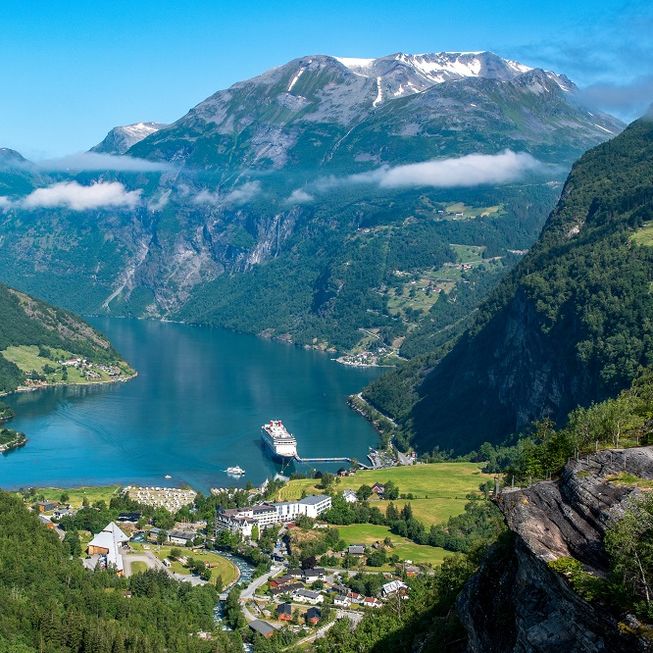
Norway is often associated with fjords, skiing, and oil wealth. While these elements exist, they represent only part of a modern, innovative society. Stereotypes about Norwegians being reserved overlook their strong sense of community, equality, and cooperation. Norway’s culture values modesty, consensus, and work‑life balance — shaped by one of the world’s most “feminine” Hofstede profiles.
4. What topics are discussed during small talk?
Small talk often includes weather, outdoor activities, travel, sports — especially skiing and football — and weekend plans. Norwegians enjoy discussing nature, hiking, and cultural events. In business settings, conversations may touch on sustainability, innovation, and Norway’s role in the Nordic region.
a. Exporte: Norway exports oil and gas, seafood, metals, raw commodities, machinery, and renewable‑energy technologies.
To: European countries (especially Germany, UK, Netherlands), United States, and Nordic neighbors.
b. Importe: Key imports include machinery, electronics, vehicles, chemicals, and consumer goods.
From: EU countries, China, and Nordic partners.
Norway has excellent infrastructure, but logistics can be influenced by long distances, mountainous terrain, and winter weather. Urban congestion in Oslo and strict environmental regulations require careful planning. Ports and rail systems are modern and efficient, but high costs and geographic conditions can affect transport. Despite this, Norway remains a highly advanced logistics environment with strong sustainability initiatives.
We make sure prunes and silly Christmas sweaters are in place to Christmas every year. We are also heavily into export of fish so people can eat healthy food and export of electric- and communication cables so people have electricity and can communicate. We even transported a more than 200-meter-long tunnel drilling machine weighing several hundred tons for Oslo’s water supply, securing fresh water to the city’s inhabitants.
Norwegian festive cuisine includes:
Norway offers exceptional nature and culture. Highlights include: